
B.A. Business Economics (Four-Year Taught Program)
The Business Economics major equips students with the analytical and practical skills needed to understand how businesses, governments, and individuals make decisions in environments shaped by limited resources. By combining economic theory with real-world business applications, students build a strong foundation in economics, finance, and global business practices. Students explore areas such as international trade, finance, and economic strategy while developing the ability to evaluate complex economic issues across borders.
Graduates of the Business Economics major typically move into a wide range of positions in the business world, with many past graduates going on to work at global institutions and companies across various industries. The program equips students with practical business knowledge and analytical skills that can be applied in both domestic and international environments.
From Economic Theory to Business Practice
The B.A. Business Economics program categorizes its courses into five concentration areas:
Management
The process of planning, organizing, leading, and controlling an organization's human, financial, and physical resources to achieve its goals effectively and efficiently. Prepare to bridge the gap between high-level strategic vision and daily execution by learning the principles behind coordinating teamwork, allocating budgets, and adapting to changing environments.
Entrepreneurial Business
The venture of identifying market gaps and launching innovative, scalable enterprises by taking on calculated financial risks for profit. The BE major helps you drive economic growth by transforming creative ideas into sustainable business models and dynamically adapting to uncertain market conditions.
Finance
The strategic management, creation, and study of money, banking, credit, investments, assets, and liabilities to fund operations and maximize value. Courses under this concentration module inform about the key techniques employed in optimizing cash flows for individuals, companies, and governments.
Economics
The social science that studies how individuals, businesses, governments, and nations allocate scarce resources to satisfy unlimited wants and needs. Students analyze the incentives that drive human choices, the mechanisms of production, distribution, and consumption, and how policies and institutions influence overall market stability and growth.
Marketing
The strategic process of identifying, anticipating, and satisfying customer needs by creating, communicating, and delivering valuable offerings to a target audience. Learn how to drive organizational growth by building strong customer relationships, conducting market research, and managing the mix of product, price, place, and promotion.
Hear from the Business Economics Faculty
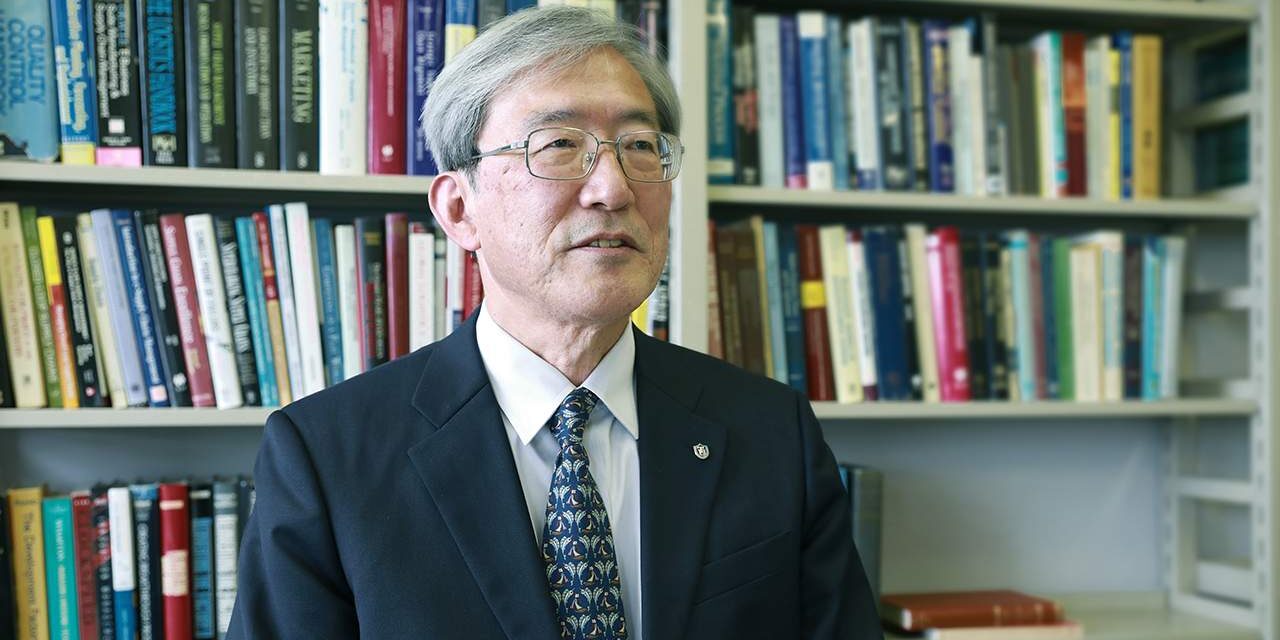
Hirofumi Matsuo | Director of the Institute for International Strategy and Professor of Business Economics
"I studied engineering at Kyoto University, Japan, and joined MIT to explore Management and Operations Research. MIT is a global institution where top-notch students and faculty gather from all over the world, and co-produce cutting-edge educational and research outcomes...
...TIU recreates and provides a truly global learning environment like MIT, with a social science professional focus. Come join our globally top-notch students and faculty, and let us co-produce results that contribute to your professional career and the future society."

Sumire Stanislawski | Professor of Marketing
"I enjoy teaching in the E-track program because discussions are always interesting and I get to learn new perspectives from our diverse student body. I feel a major advantage of our program is this global perspective that students encounter throughout their time here...
...Emerging business leaders need to be able to communicate cross-culturally and analyze complexities from an informed perspective. I believe our program offers a solid opportunity for students to gain such skills, both in and out of class."
In addition to courses within the field of Business Economics, TIU E-Track programs aim to equip students with a range of skills, including courses in academic literacy, Japanese, liberal arts, and programs such as university exchanges in up to 270 locations.
Click the link below for further information about TIU's programs.