B.A. International Relations (Four-Year Taught Program)
The International Relations major equips students with the analytical, cultural, and communication skills needed to understand the complex relationships between nations, governments, international organizations, and global societies. By combining political theory with real-world global issues, students develop a strong foundation in diplomacy, international politics, global economics, and cross-cultural understanding. Students explore areas such as international security, human rights, global governance, environmental issues, and economic interdependence while learning to evaluate international challenges from multiple perspectives.
Graduates of the International Relations major pursue careers across a wide range of international and intercultural fields, with many moving into positions in government agencies, multinational companies, non-governmental organizations, international institutions, and global media. Through classroom discussions and collaborative learning with students from diverse cultural backgrounds, the program develops the critical thinking, adaptability, and global awareness needed to work effectively in an increasingly interconnected world.
Navigating the Forces that Shape our World
The B.A. International Relations program categorizes its courses into four concentration areas:
Global Governance
The study of how international organizations, governments, and non-state actors cooperate to address global challenges that extend beyond national borders. Students examine issues such as diplomacy, international law, sustainable development, and global policymaking while developing the skills needed to understand and navigate an increasingly interconnected world.
International Security
The field that explores the causes of conflict, war, terrorism, and geopolitical instability, as well as the strategies used to maintain peace and security among nations. Students analyze contemporary security challenges and learn how governments and international institutions respond to evolving global threats in a rapidly changing international environment.
International Political Economy
The interdisciplinary study of how politics and economics interact on a global scale to shape trade, finance, development, and international relations. This concentration helps students understand the economic forces influencing governments, businesses, and societies while examining the impact of globalization on international cooperation and competition.
Culture and Society
The exploration of how culture, identity, values, and social structures influence human behavior and relationships across different societies. Students develop cross-cultural understanding and critical perspectives on global social issues while learning how cultural diversity shapes communication, politics, and international interaction.
Hear from the International Relations Faculty
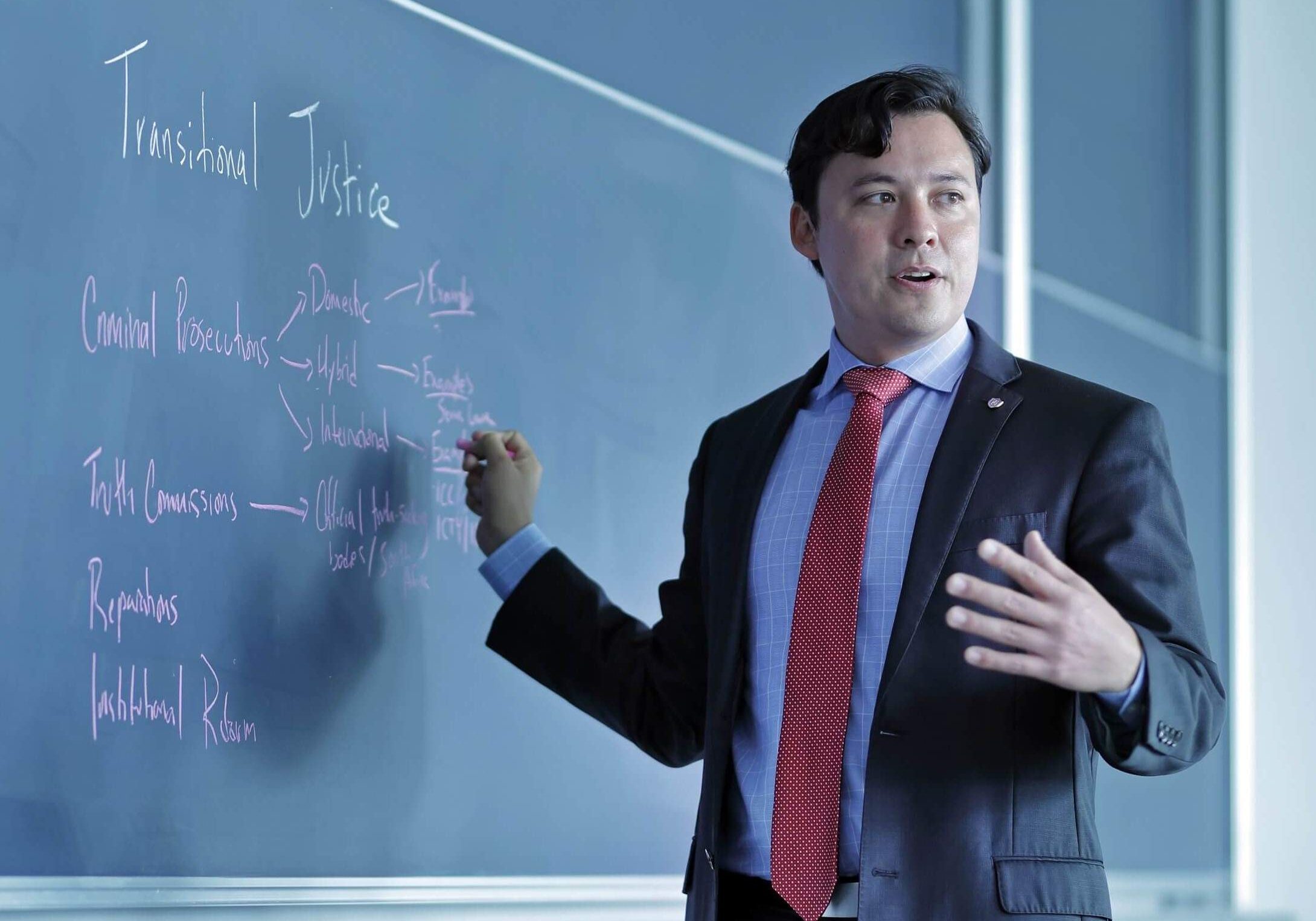
Christopher Lamont | Dean of E-Track and Professor of International Relations
"My interest in International Relations led me to study abroad in Croatia at a time when the country was confronted with the task of dealing with the immediate legacy of armed conflict. It was in part this experience that led me to ask questions about how societies deal with the legacies of conflict, and to eventually write a doctoral dissertation on efforts to prosecute war crimes in the former Yugoslavia...
...In the classroom, my students are encouraged to discuss contentious issues that are at the forefront of international politics so as to better understand academic and policy debates, and also to think about how they can apply their own ideas and experiences to addressing real world problems."
In addition to courses within the field of International Relations, TIU E-Track programs aim to equip students with a range of skills, including courses in academic literacy, Japanese, liberal arts, and programs such as university exchanges in up to 270 locations.
Click the link below for further information about TIU's programs.